Platform Agnostic Mission Applications (PAMA)
GMW delivers a Zero Trust-enabled, mobile-first mission system that provides tactical awareness and secure data sharing at the edge, without requiring platform modification.
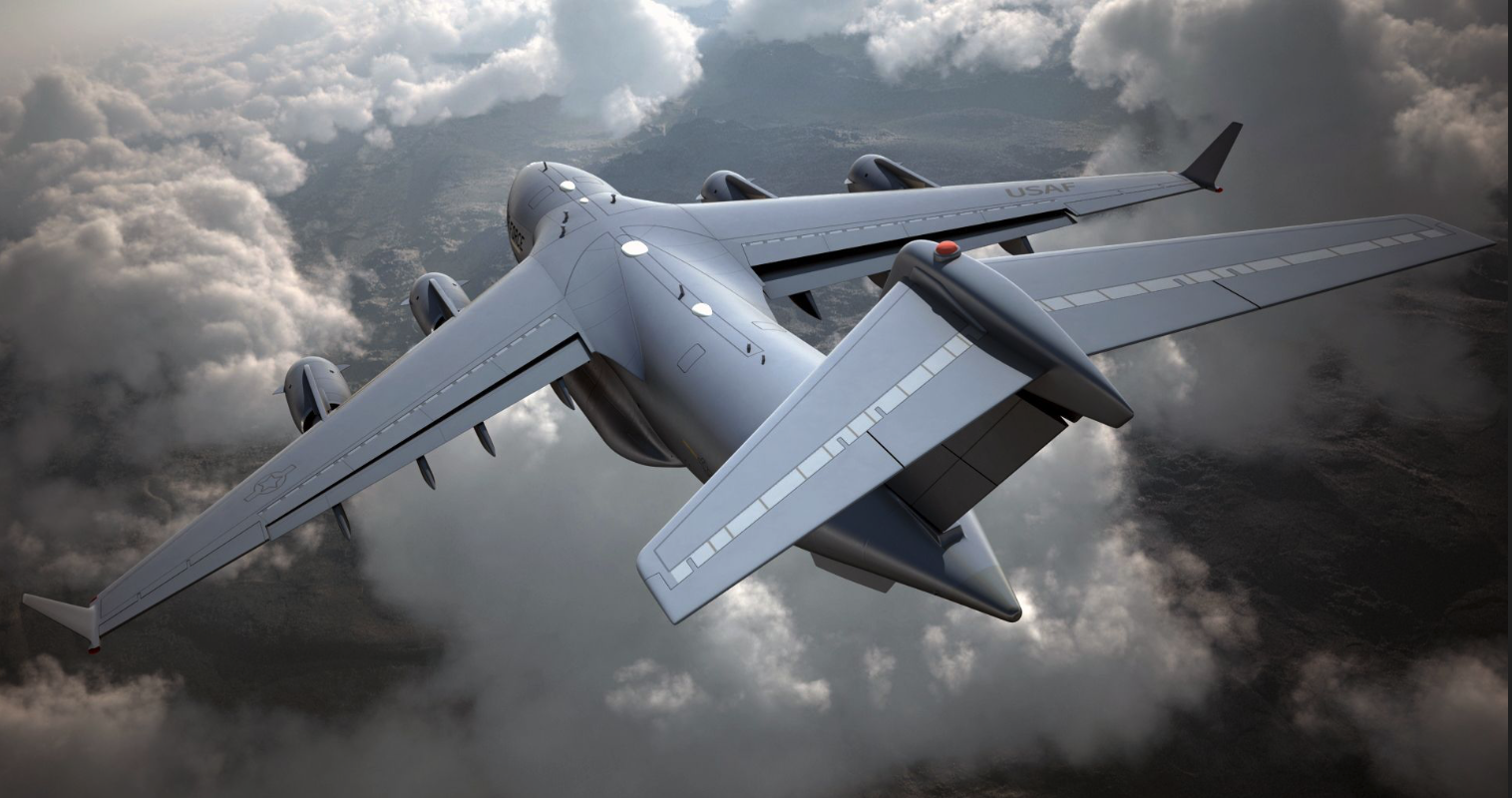
Global reach demands mission-ready awareness at the tactical edge. We have your back!
Mobility and tanker aircraft operate in contested RF environments with electronic warfare systems and mission data that update on timelines of months or years. This mismatch between threat evolution and update cadence degrades survivability, limits operator awareness, and constrains mission effectiveness during dynamic operations. Closing this gap enables a unified, in-flight Common Operational Picture (COP) at the tactical edge, improving survivability and mission effectiveness during contested ingress, on-station operations, and egress. This COP integrates threat awareness, blue-force data, and mission updates into a single operator-usable view.
GMW directly addresses DIU PROJ00662 by enabling Open Mission Engine (OMEN)-aligned, platform-agnostic mission applications that execute at the tactical edge, delivering validated mission and threat updates within a single mission cycle. This approach extends high-tempo, mission-cycle update practices proven in U.S. Navy and Royal Australian Air Force operations to mobility and tanker fleets.
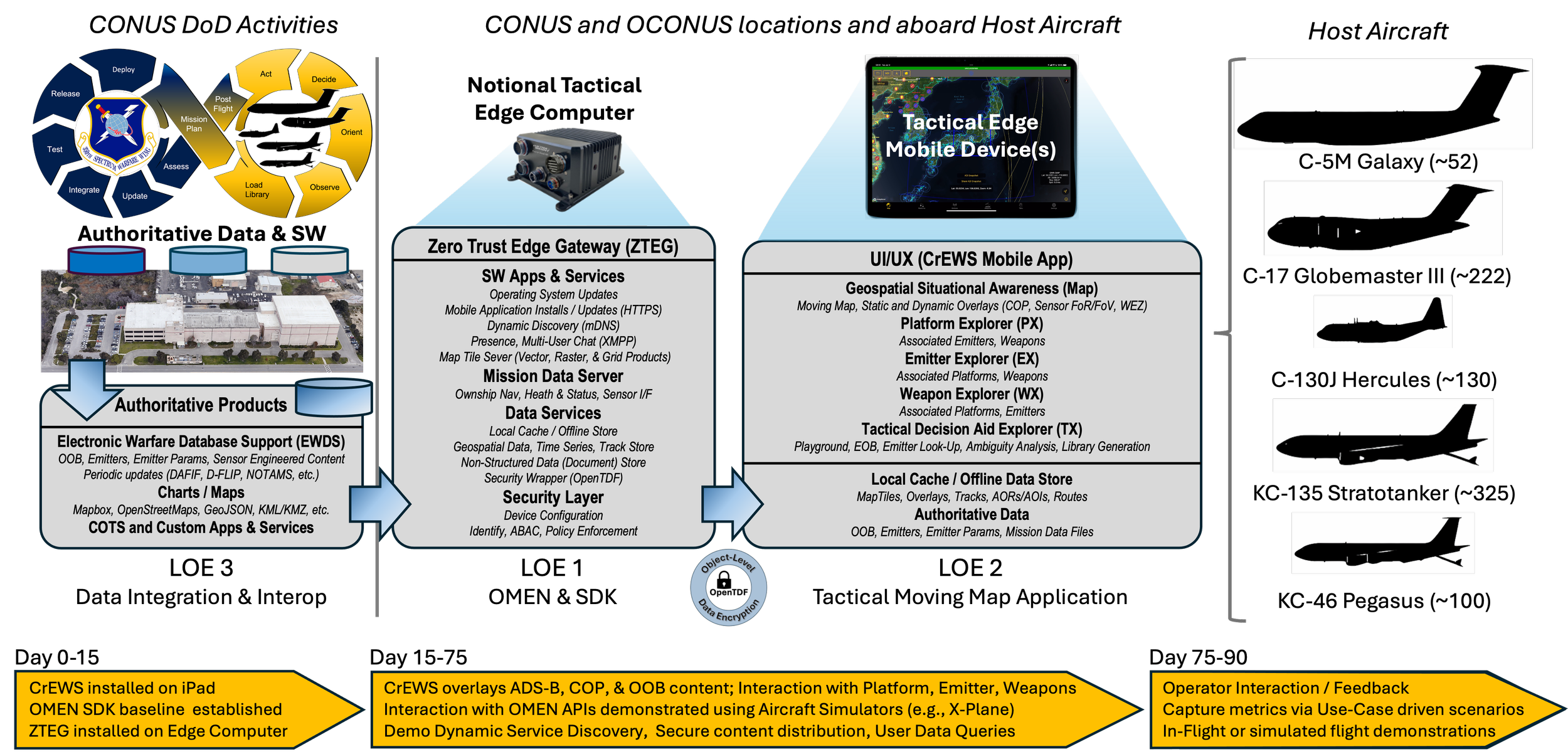
90 Day Phase 1 Execution Timeline (Initial Integration by Day 15, Demonstrations Begins by Day 75)
PAMA Technical Approach
The approach is organized around three lines of effort (LOEs):
LOE 1: Open Mission Engine and SDK
LOE 2: Tactical Moving Map Application
LOE 3: Data Integration and Interoperability
For LOE 1, GMW’s Zero Trust Edge Gateway (ZTEG) provides the edge runtime and orchestration layer for the government-provided OMEN modular application engine and SDK, enabling OMEN-compliant applications to execute at the tactical edge through standardized interfaces for data access, lifecycle management, and secure communications. The architecture preserves government ownership while supporting multi-vendor deployment without lock-in, and enables containerized, DevSecOps-aligned delivery with configuration control and observability across heterogeneous platforms in both connected and DDIL environments without aircraft modification. ZTEG does not replace the OMEN engine; rather, it provides the runtime and edge services required for the secure deployment, execution, and lifecycle management of OMEN-compliant applications.
At the core of LOE 2 is CrEWS® Mobile, a mobile-first application paired with edge services that fuse multi-source sensor and mission data into operator-ready geospatial overlays. The system is intended to combine track inputs such as ADS-B, blue-force, and mission system data with authoritative airspace, threat locations, weapons engagement zones (WEZ), AORs, AOIs, and route overlays. Legacy aviation data sources such as DAFIF, D-FLIP, and NOTAMs, together with emerging formats including KML, JSON, GeoJSON, and CoT, are normalized and rendered through CrEWS® Mobile or Military Flight Bag (MFB) applications.
For LOE 3, GMW supports Mission Data File updates for Electronic Warfare systems such as the ALR-69A and emerging ALQ-251 by extending capabilities established by NAWCWD and used by U.S. Navy and allied partners. This approach supports routine monthly update cycles as well as rapid-response updates within operationally actionable timelines. GMW’s adaptation of the OpenTDF standard also plays a key security role in protecting content as it is distributed to ZTEG nodes and onward to end-user-facing devices equipped with the CrEWS Mobile app.
Unlike platform-specific, hardware-bound solutions with long update cycles, PAMA is intended to build on government-owned solutions such as OMEN, mission-data pipelines maintained by NAWCWD and other operational sources, and GMW’s software-defined capabilities to provide authoritative mission data, current threat information, and mission context in DDIL environments.
PAMA uses a platform-agnostic architecture to field mission applications without aircraft modification. The approach is readily demonstrable in aircraft-representative environments and aligned with OMEN objectives for rapid integration, operational relevance, and transition readiness using government-furnished or representative hardware, including iPad-class EFB devices.
The demonstration will show cross-platform mission applications executing at the tactical edge on mobility and tanker aircraft with in-flight updates, delivering current threat awareness and mission context to operators, enabling immediate operational evaluation and transition within mobility and tanker fleets (C-5M, C-17, C-130J, KC-135, KC-46).
To learn more about this innovation and our mission, reach out to us at: pama@globalmaritimewerx.com or (866) USN-CREW / (866) 876-2739 x701